Optical Bonding Guide: Improving Display Readability and Durability in Embedded Systems
A practical guide to optical bonding technology for embedded and industrial displays. Learn how optical bonding improves sunlight readability, reduces reflections, increases contrast, and strengthens display modules in outdoor and industrial environments.
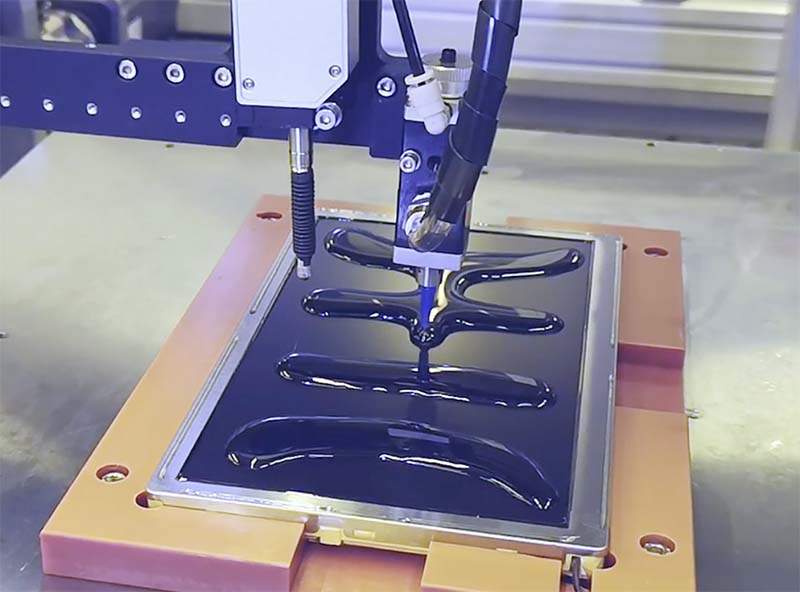
Optical bonding has become an increasingly important technology in modern embedded display systems. As electronic devices move into more demanding environments—such as industrial automation, medical equipment, outdoor kiosks, and transportation systems—standard display assemblies often struggle to provide sufficient visibility, durability, and reliability.
Optical bonding addresses these challenges by improving display clarity, reducing internal reflections, and strengthening the mechanical structure of the display module. For many engineers designing embedded systems or industrial control panels, understanding when and how to use optical bonding can significantly improve the overall performance of a product.
This guide explains the fundamentals of optical bonding, how it works, its key advantages, common materials used, and how to determine whether optical bonding is suitable for your display system.
What Is Optical Bonding?
Optical bonding is a process used in display manufacturing where a transparent adhesive layer is applied between the display panel and the cover glass or touch panel. This adhesive layer eliminates the air gap that normally exists between these components.
In a typical non-bonded display assembly, the structure may look like this:
Display Panel → Air Gap → Touch Panel → Cover Glass
The air gap introduces several optical issues, particularly reflections and reduced contrast in bright environments.
With optical bonding, the structure changes to:
Display Panel → Optical Adhesive → Touch Panel → Cover Glass
Because the adhesive has a refractive index close to that of the glass and display surface, light passes through the layers more efficiently. This significantly improves display readability and reduces glare.
Optical bonding is widely used in applications where displays must remain visible in high ambient light conditions.
Why Air Gaps Reduce Display Performance
To understand the benefits of optical bonding, it is helpful to examine how air gaps affect display performance.
When light travels between materials with different refractive indices, part of the light is reflected at each interface. In a traditional display stack that includes an air gap, light passes through multiple surfaces:
- Display surface
- Air interface
- Touch panel surface
- Cover glass
Each interface can cause reflections.
In bright environments such as outdoor installations, these reflections combine with ambient light, washing out the displayed image. As a result, users may experience:
- Lower contrast
- Reduced readability
- Increased glare
- Poor viewing experience
Optical bonding minimizes these interfaces by replacing the air gap with a transparent adhesive layer that allows light to pass through more smoothly.
How Optical Bonding Works
The optical bonding process typically involves filling the space between the display panel and the cover glass with a clear optical adhesive.
Two common types of adhesives are used:
- Optically Clear Adhesive (OCA)
- Optically Clear Resin (OCR)
The bonding process usually follows several steps:
- Cleaning the display and cover glass surfaces
- Applying the adhesive layer
- Aligning the touch panel or cover glass
- Removing bubbles using vacuum equipment
- Curing the adhesive with UV or thermal processes
The result is a unified optical stack where the display, adhesive layer, and cover glass behave as a single optical medium.
Major Benefits of Optical Bonding
Optical bonding provides several advantages that are especially valuable for embedded display systems used in demanding environments.
Improved Sunlight Readability
One of the most important benefits of optical bonding is improved visibility under strong ambient light.
By eliminating the air gap, internal reflections are greatly reduced. This allows more of the display’s emitted light to reach the viewer instead of being reflected back inside the display stack.
The result is:
- Higher perceived contrast
- Better image clarity
- Improved outdoor readability
For outdoor equipment such as kiosks, industrial panels, or marine displays, optical bonding can make a dramatic difference in usability.
Higher Display Contrast
Optical bonding improves contrast by reducing light scattering within the display structure.
In traditional air-gap displays, reflected ambient light mixes with the light produced by the display, lowering the contrast ratio.
With optical bonding, less ambient light is reflected internally, which helps maintain deeper blacks and clearer colors.
This improvement is particularly noticeable in bright environments.
Reduced Internal Reflections
Internal reflections are one of the major causes of washed-out displays.
Optical bonding reduces reflections at internal interfaces, especially between the display panel and the touch layer.
This results in a cleaner visual appearance with fewer ghost reflections and less glare.
Improved Mechanical Strength
Optical bonding also enhances the mechanical durability of the display assembly.
Because the adhesive layer physically connects the display and cover glass, the entire module becomes more rigid and resistant to shock and vibration.
This is particularly important in applications such as:
- Industrial control equipment
- Vehicle-mounted displays
- Outdoor terminals
- Heavy machinery interfaces
A bonded display is generally more robust than a display with an air gap.
Prevention of Internal Condensation
Displays with air gaps can sometimes suffer from internal condensation when exposed to temperature changes or humidity.
Moisture may accumulate inside the display stack, creating fogging between layers.
Optical bonding eliminates the internal air space where condensation can occur, helping maintain display clarity in challenging environments.
Types of Optical Bonding Materials
Several materials can be used for optical bonding, each with its own advantages.
Optically Clear Adhesive (OCA)
OCA is a solid adhesive film that is laminated between display layers.
Advantages include:
- Uniform thickness
- Clean processing
- Good optical clarity
However, OCA can be more difficult to apply to curved surfaces or displays with uneven structures.
Optically Clear Resin (OCR)
OCR is a liquid adhesive that fills the bonding space before curing.
Advantages include:
- Ability to fill uneven surfaces
- Good flexibility
- Suitable for complex display assemblies
OCR processes typically require more specialized equipment for bubble removal and curing.
When Should Optical Bonding Be Used?
Optical bonding is not necessary for every display design. In some cases, the additional manufacturing cost may not be justified.
However, optical bonding is strongly recommended in several scenarios.
Outdoor Displays
Displays used in outdoor environments often experience strong sunlight and high ambient brightness.
Examples include:
- Outdoor kiosks
- EV charging stations
- Smart city terminals
- Marine electronics
Optical bonding significantly improves visibility in these environments.
Industrial Equipment
Industrial control panels often operate in dusty, humid, or high-vibration environments.
Optical bonding improves both readability and structural durability, making it well suited for industrial applications.
Medical Devices
Medical displays often require excellent visual clarity and reliability.
Optical bonding helps eliminate internal reflections and prevents condensation, which can be important in sterile environments.
Transportation Systems
Displays used in transportation systems must remain visible under varying lighting conditions.
Applications include:
- Train control panels
- Bus information systems
- Aviation equipment
- Marine navigation displays
Optical bonding improves reliability in these demanding conditions.
Optical Bonding and High-Brightness Displays
Optical bonding is often combined with high-brightness backlight systems to achieve maximum outdoor visibility.
High-brightness displays may use backlights rated at:
- 800 nits
- 1000 nits
- 1500 nits or higher
However, brightness alone does not guarantee readability.
Without optical bonding, reflections inside the display stack can still reduce effective contrast.
Combining optical bonding with a high-brightness backlight creates a much more readable display in outdoor conditions.
Optical Bonding vs Air Gap Displays
The following comparison summarizes the differences between bonded and non-bonded displays.
| Feature | Air Gap Display | Optical Bonded Display |
|---|---|---|
| Internal reflections | Higher | Much lower |
| Outdoor readability | Limited | Significantly improved |
| Contrast ratio | Lower | Higher |
| Mechanical strength | Moderate | Improved |
| Condensation risk | Possible | Minimal |
While optical bonding adds cost to the display module, the performance improvements often justify the investment in professional or industrial products.
Design Considerations for Optical Bonding
Engineers planning to use optical bonding should consider several design factors.
Thermal Expansion
Different materials in the display stack expand at different rates under temperature changes.
The adhesive must accommodate this expansion without causing stress or delamination.
Display Flatness
Optical bonding works best when display surfaces are flat and clean. Surface irregularities can create bubbles or distortions.
Manufacturing quality control is therefore critical.
Repair and Replacement
One downside of optical bonding is that bonded displays are more difficult to repair.
If one layer is damaged, the entire bonded module may need to be replaced.
Designers should consider serviceability when selecting bonding solutions.
Future Trends in Optical Bonding
As embedded displays become more advanced, optical bonding technologies are also evolving.
Future developments may include:
- Improved bonding materials with better durability
- Bonding techniques for flexible displays
- Integration with advanced anti-reflection coatings
- Automated bonding processes for high-volume production
These developments will continue to improve display performance in demanding environments.
Conclusion
Optical bonding is an important technology for improving the readability, durability, and overall performance of embedded display systems. By eliminating the air gap between display layers, optical bonding reduces internal reflections, increases contrast, and enhances sunlight visibility.
Although optical bonding increases manufacturing complexity and cost, it provides significant advantages for many professional applications. Industrial equipment, medical devices, transportation systems, and outdoor terminals all benefit from the improved optical performance and mechanical strength provided by bonded displays.
For engineers designing modern embedded display systems, understanding optical bonding and its applications is an essential step toward building more reliable and user-friendly products.