7 Inch Industrial TFT Display for Outdoor Use: Key Features and Selection Guide
A practical guide to choosing 7 inch industrial TFT displays for outdoor applications, covering sunlight readability, high brightness, optical bonding, touch panels, surface treatment, and reliability.
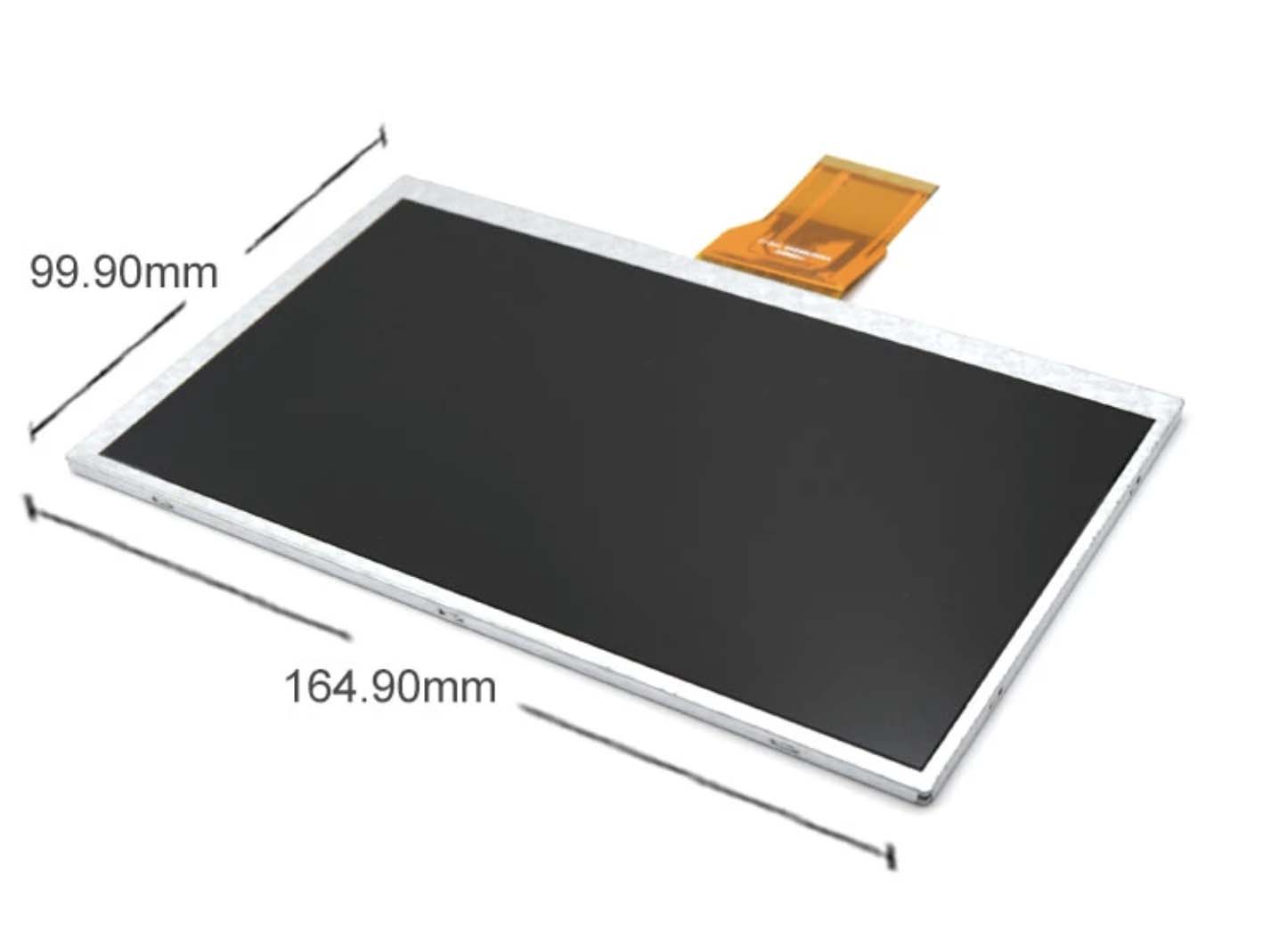
A 7 inch industrial TFT display is a common choice for outdoor embedded devices because it offers a practical balance between screen size, readability, power consumption, mechanical size, and integration cost. It is large enough to show menus, status information, icons, maps, data tables, and touch controls, but still compact enough to fit into portable terminals, wall-mounted panels, charging equipment, kiosks, access systems, and industrial control products.
Outdoor use places much higher demands on a TFT display than indoor use. The display must remain readable under sunlight, operate across a wide temperature range, resist vibration and moisture, support reliable touch operation, and maintain stable performance over long service life. For this reason, selecting a 7 inch industrial TFT display for outdoor use is not only about resolution or brightness. Engineers also need to consider optical design, backlight lifetime, bonding method, surface treatment, interface type, mechanical structure, and system-level thermal management.
This article explains the most important factors when choosing and integrating a 7 inch industrial TFT display for outdoor applications.
Why 7 Inch Is a Popular Size for Outdoor Industrial Devices
The 7 inch size has become popular because it provides enough display area for practical user interaction without making the final product too large. Compared with smaller displays such as 3.5 inch or 4.3 inch panels, a 7 inch screen can show more information at one time. This is useful for outdoor control terminals, EV chargers, agricultural equipment, marine devices, parking systems, and industrial monitoring panels.
At the same time, a 7 inch display is easier to integrate than larger 10.1 inch or 12.1 inch panels. It requires less backlight power, generates less heat, and allows a more compact enclosure. For many outdoor products, enclosure size and power budget are critical. A 7 inch industrial TFT display often gives engineers a good compromise between usability and product design constraints.
Another reason is supply-chain maturity. 7 inch TFT LCD modules are widely available in different resolutions, brightness levels, interfaces, viewing technologies, and touch options. This gives product developers more flexibility when matching the display to their hardware platform and application requirements.
Typical Outdoor Applications
A 7 inch industrial TFT display for outdoor use can be applied in many product categories.
One common application is EV charging equipment. A 7 inch display can show charging status, pricing information, QR codes, payment instructions, error messages, and user guidance. Since EV chargers are often installed outdoors, the display must be readable in daylight and reliable under changing weather conditions.
Another important application is industrial control equipment. Outdoor machines, power cabinets, water treatment systems, and remote monitoring stations may use a 7 inch display as the local HMI. Operators need to view system status, alarms, settings, and maintenance information directly on site.
Agricultural and construction equipment also use 7 inch screens. These machines may work in bright sunlight, dust, vibration, and temperature changes. The display must be rugged enough for field operation and clear enough for operators to read quickly.
Other applications include parking payment terminals, access control panels, outdoor kiosks, vending machines, marine electronics, transportation equipment, solar inverter displays, battery energy storage systems, and building automation panels.
Sunlight Readability
Sunlight readability is one of the most important requirements for an outdoor TFT display. A display that looks bright indoors may become difficult to read under direct sunlight. Outdoor readability depends on several factors, including brightness, contrast ratio, reflectance, optical bonding, polarizer type, cover glass, and surface treatment.
For outdoor use, high brightness is usually required. Many indoor TFT displays have brightness levels around 250 to 500 nits. For outdoor or semi-outdoor environments, 800 nits, 1000 nits, or even higher brightness may be needed. However, brightness alone does not guarantee readability. If the front surface reflects too much light, the screen may still look washed out.
Contrast is equally important. The display should maintain a clear difference between dark and bright areas under strong ambient light. IPS panels are often preferred because they offer wide viewing angles and stable color performance from different directions.
Optical bonding can greatly improve readability by reducing internal reflections between the LCD, touch panel, and cover glass. In outdoor products, this is often more effective than simply increasing backlight brightness. A bonded display can look clearer, improve contrast, and reduce glare caused by air gaps.
High Brightness and Backlight Design
A high-brightness 7 inch TFT display usually uses a stronger LED backlight than a standard indoor display. This helps the screen remain visible in bright environments. However, high brightness also introduces several design challenges.
The first challenge is power consumption. A brighter backlight requires more power, which affects the power supply design and battery life if the device is portable. The second challenge is heat. More backlight power creates more heat inside the display module and enclosure. If thermal design is poor, the LCD may suffer from reduced lifetime, brightness decay, or abnormal display behavior.
Backlight lifetime is another key factor. Industrial products often need long service life. Engineers should check the backlight lifetime rating and understand how brightness, temperature, and usage time affect LED aging. A display running at full brightness under high temperature may age faster than the same display used indoors.
A good outdoor design may include automatic brightness control. The system can increase brightness under sunlight and reduce brightness at night or in shaded conditions. This improves readability, saves power, reduces heat, and extends backlight lifetime.
Optical Bonding for Outdoor Displays
Optical bonding is highly recommended for many outdoor display applications. In a standard air-bonded structure, there is an air gap between the LCD and touch panel or cover glass. Light reflects at each surface transition, especially where glass meets air. These reflections reduce contrast and make the display harder to read outdoors.
Optical bonding fills the air gap with a transparent adhesive material, such as OCA or OCR. This reduces reflection, improves contrast, strengthens the display structure, and can also reduce internal fogging. For outdoor products, optical bonding often provides a visible improvement in screen clarity.
Bonding also improves mechanical robustness. Since the LCD, touch panel, and cover glass are joined together, the module can better resist vibration and impact. This is useful for industrial equipment, vehicles, outdoor kiosks, and field instruments.
However, optical bonding also increases cost and requires careful process control. The selected bonding material must remain stable under temperature changes, UV exposure, humidity, and long-term outdoor use. Engineers should work with a display supplier that understands industrial bonding requirements rather than treating bonding as a simple assembly step.
Surface Treatment: AG, AR, and AF
Surface treatment is another important part of outdoor display design. The front surface of the display may need anti-glare, anti-reflective, or anti-fingerprint treatment depending on the application.
Anti-glare treatment reduces mirror-like reflection by scattering reflected light. This makes the display easier to view under bright ambient light, especially when the screen is used at different angles. However, aggressive anti-glare treatment can slightly reduce image sharpness, so the haze value should be selected carefully.
Anti-reflective coating reduces surface reflection and can improve display clarity. AR coating is especially useful for high-end outdoor equipment, medical terminals, marine electronics, and devices used under strong sunlight. It can be combined with optical bonding for better optical performance.
Anti-fingerprint coating improves the touch surface by reducing visible fingerprints and making cleaning easier. This is useful for public terminals, EV chargers, kiosks, and access control panels where many users touch the screen.
The correct surface treatment depends on the use environment. A rugged outdoor control panel may prioritize anti-glare and durability. A premium public terminal may need anti-reflective and anti-fingerprint performance. In some products, all three treatments may be considered.
Wide Temperature Operation
Outdoor devices must operate across wider temperature ranges than indoor products. Depending on the application and region, the display may face freezing winter temperatures, hot summer sunlight, or rapid temperature changes between day and night.
A 7 inch industrial TFT display for outdoor use should support a suitable operating temperature range. Common industrial ranges may include -20°C to 70°C or -30°C to 80°C, depending on the panel design. Storage temperature should also be checked, especially for products shipped or stored in uncontrolled environments.
Low temperature can affect LCD response time. The screen may refresh more slowly, and motion may appear blurred. High temperature can affect liquid crystal performance, backlight lifetime, polarizer stability, and adhesive materials. If the product is installed in direct sunlight, the internal display temperature may be much higher than the ambient air temperature.
Thermal design should be considered at the system level. The enclosure material, ventilation, heat spreading, backlight power, PCB layout, and installation angle can all affect display temperature.
Touch Panel Requirements
Many outdoor 7 inch industrial TFT displays include a capacitive touch panel. Touch operation makes the interface more flexible and user-friendly, but outdoor environments introduce special challenges.
Water droplets, rain, humidity, gloves, dust, and electrical noise can affect touch performance. A touch panel used outdoors may need water rejection, glove operation, thick cover glass support, and anti-interference tuning.
The cover glass should be selected according to mechanical and environmental requirements. Public outdoor terminals may need stronger cover glass to resist impact and vandalism. Industrial equipment may need chemically strengthened glass or thicker glass for durability.
Touch controller firmware is also important. A standard indoor touch setting may not work well outdoors. For example, water on the screen may cause false touches, or gloves may reduce sensitivity. The touch controller should be tuned and tested in the final mechanical structure.
For some harsh environments, physical buttons may still be added as backup controls. This can improve usability when the screen is wet, dirty, or operated with heavy gloves.
Interface Selection
A 7 inch industrial TFT display can use different interfaces, including RGB, LVDS, MIPI DSI, HDMI, and sometimes eDP. The best choice depends on the host platform, resolution, cable length, EMI requirements, and product structure.
RGB interface is common in many embedded systems and is easy to support on some microcontroller and ARM platforms. However, it uses more signal lines and may be less suitable for longer cable distances.
LVDS is widely used in industrial displays because it provides stable high-speed transmission and better noise performance over moderate cable lengths. It is a common choice for 7 inch and larger TFT displays.
MIPI DSI is common in compact embedded devices and Android-based platforms. It uses fewer signal lines and supports high-resolution displays, but cable length is usually limited and layout requirements are stricter.
HDMI is convenient when the display is connected to an SBC or industrial computer with standard HDMI output. However, it may require additional controller boards if the panel itself does not directly support HDMI.
Engineers should choose the display interface early because it affects the mainboard design, cable routing, connector selection, EMI performance, and software driver support.
Mechanical Design and Enclosure Integration
Outdoor display integration requires careful mechanical design. The LCD module, touch panel, cover glass, gasket, front frame, back enclosure, PCB, cables, and mounting structure must work together.
The front side should prevent water, dust, and contaminants from entering the device. Depending on the application, the product may need an IP-rated front panel. The sealing structure must be compatible with the touch panel, cover glass, and enclosure material.
Mechanical pressure on the LCD should be avoided. Uneven pressure may cause light leakage, display mura, touch problems, or long-term damage. The mounting structure should support the module securely without bending or stressing the LCD glass.
Cable routing is also important. Display and touch cables should be protected from vibration, sharp bends, and EMI sources. If the product is used in vehicles or machinery, vibration testing should be included.
For outdoor public devices, vandal resistance may also be important. Strong cover glass, recessed mounting, metal front frames, and secure fastening methods can improve durability.
Power and Thermal Management
A high-brightness outdoor display consumes more power than a standard indoor display. The backlight is usually the largest power consumer in the display module. Engineers must ensure that the power supply can provide stable current without overheating or causing brightness flicker.
Thermal management is closely related to backlight design. If the display is sealed inside a compact enclosure, heat may accumulate. Direct sunlight can further increase the surface and internal temperature. This may reduce display lifetime or cause temporary display abnormalities.
The system design should include thermal paths for heat dissipation. Metal frames, heat spreaders, thermal pads, enclosure design, and controlled backlight brightness can all help manage temperature.
Automatic brightness adjustment is often useful. A light sensor can detect ambient light and adjust backlight brightness. This improves user experience and reduces unnecessary heat at night or in shaded areas.
Reliability and Lifetime
Outdoor industrial products often need long lifecycles. A display failure can cause expensive maintenance, especially if the device is installed in a remote location or public area.
Reliability depends on LCD quality, backlight lifetime, bonding materials, polarizer stability, touch panel durability, connector quality, and mechanical protection. Engineers should check the display supplier’s specifications carefully and confirm whether the module is suitable for outdoor industrial use.
UV exposure is another important factor. Long-term sunlight may affect polarizers, adhesives, plastics, and surface coatings. If the product will be exposed to direct sunlight for years, UV stability should be discussed with the supplier.
Humidity and condensation should also be considered. Optical bonding can reduce internal condensation risk, but the complete enclosure still needs proper sealing and moisture control.
Before mass production, the display should be tested under temperature cycling, high humidity, vibration, touch operation, brightness aging, and outdoor light conditions.
Choosing the Right 7 Inch Industrial TFT Display
When selecting a 7 inch industrial TFT display for outdoor use, engineers should look beyond the basic datasheet. Resolution and brightness are important, but they are only part of the decision.
Key selection factors include:
- Display size and active area
- Resolution and pixel density
- Brightness level
- Contrast ratio
- IPS or wide-viewing-angle technology
- Operating and storage temperature range
- Backlight lifetime
- Interface type
- Touch panel option
- Cover glass strength
- Optical bonding availability
- AG, AR, or AF surface treatment
- Power consumption
- Mechanical dimensions
- Connector type and cable design
- UV and humidity resistance
- Long-term supply stability
- Customization support
For outdoor products, it is usually better to evaluate the display inside the real enclosure instead of testing the LCD module alone. The final result depends on the full optical stack, front glass, touch panel, air gap or bonding structure, backlight, enclosure, and installation angle.
Testing Before Production
Testing is essential before using a display in an outdoor industrial product. Indoor visual inspection is not enough.
Sunlight readability should be tested under real outdoor conditions. Engineers should check whether the screen remains readable at different viewing angles and brightness levels. If the product will be used with sunglasses, polarized sunglasses should also be considered because some LCD polarizer directions may affect visibility.
Temperature testing should include both low and high temperature operation. The display should be checked for slow response, abnormal color, backlight behavior, touch performance, and recovery after temperature changes.
Water and humidity testing are important for outdoor devices. Touch performance should be tested with water droplets, wet fingers, and humidity exposure if required by the application.
Vibration and shock testing may be necessary for vehicles, construction equipment, industrial machines, or field instruments. The display cable, connector, mounting structure, and bonding layer should remain stable.
Long-term aging tests should include high brightness operation, backlight aging, touch operation, and thermal cycling. These tests help identify problems before the product enters mass production.
Conclusion
A 7 inch industrial TFT display for outdoor use is a practical display solution for many embedded and industrial products. It offers enough screen area for clear user interaction while keeping the product compact and manageable.
However, outdoor display design requires more than choosing a standard 7 inch LCD. Engineers must consider sunlight readability, high brightness, optical bonding, surface treatment, wide temperature operation, touch performance, mechanical sealing, power consumption, thermal management, and long-term reliability.
For EV chargers, outdoor kiosks, industrial control panels, agricultural machines, energy systems, access terminals, and field equipment, the display is a critical part of the user experience. A well-selected and properly integrated 7 inch industrial TFT display can make the product easier to use, more reliable, and more suitable for demanding outdoor environments.
The best display choice is not simply the brightest panel or the highest resolution module. It is the display solution that matches the product’s optical, electrical, mechanical, environmental, and lifecycle requirements. When these factors are considered together, a 7 inch industrial TFT display can provide a strong foundation for outdoor embedded systems.
Related Engineering Context
For environmental reliability in outdoor installations, read the wide-temperature display design guide. For reflection control behind cover glass and touch, the outdoor readability and optical bonding guide is the more complete optical reference.